


The first weeks can feel like standing on a cliff.
Your mind keeps asking, Am I safe? Your body may feel incredibly unfamiliar. Ordinary things (like simply existing) can take more energy than feels possible. And one of the hardest parts of early stroke recovery is that nobody can tell you exactly how this ends.
A lot can be happening at once: physical recovery, cognitive changes, exhaustion, fear, dependence on other people, appointments, paperwork, and the sudden realization that your life has changed.
You do not have to understand all of it today.
How to use this page
Skim the headings first. Pick one section that helps you breathe. Stop there. “Small” is not a moral failure in the first weeks.
What PSI is doing here
We’re naming the lived terrain: uncertainty tolerance, invisible symptoms, and the emotional demolition that can accompany even “mild” strokes.
What Early Stroke Recovery Can Feel Like
A lot of stroke survivors describe things like:
Fatigue that feels out of proportion to what you did
Emotions that are suddenly everywhere – or completely switched off
Brain fog, difficulty concentrating, or words that are harder to find
Headaches or a crash after a day that seemed to go fine
Fear that gets louder at night or when you are alone
Feeling overwhelmed by screens, noise, errands, conversation, or too many decisions
A nagging sense that you are not recovering correctly
Post-stroke fatigue is especially common, including during the first weeks after stroke. Recovery can also be uneven: a better day followed by a difficult one does not necessarily mean that progress has been lost.
But common does not mean that every symptom should be assumed to be part of recovery.
If you have new or suddenly worsening symptoms that could be another stroke, call emergency services immediately.
The only job description that matters right now
Your job right now is to heal. That's it.
Your mind may want a timeline, a plan, and some certainty. Early stroke recovery frequently offers very little of any of them.
It can help to think of this stretch as triage for a whole life: stabilize first, optimize later. Not every problem has to be solved while your brain and body are already doing the work of recovery.
Rest is not wasted time. Asking for help is not falling behind. Doing less than you could do before your stroke does not mean you are doing recovery badly.
The question right now is not:
How quickly can I get back to everything?
It may simply be:
“What does my brain and body seem able to hold today?”
A Way to Find Your Edges
One of the difficult parts of early stroke recovery is that your limits may have changed before you have learned where the new ones are.
Sometimes you do not know that you have done too much until afterward.
Instead of turning recovery into another job to perform perfectly, it may help to loosely notice three things:
What drains you fastest?
Screens. Noise. Errands. Conversation. Driving. Decisions. Being around a lot of people.What actually restores you?
A short walk. A dark room. Music. Sleep. Quiet. Being outside. Being with someone who wants nothing from you.What tends to start the fear loop?
A new sensation. Uncertainty. Waiting for an appointment. Being alone. Reading too much online. Wondering whether recovery has stopped.
Over time, those patterns may help you understand the difference between what stretches you and what simply empties you.
When Stroke Recovery Anxiety Comes as a Question
For many people, anxiety in the first weeks after stroke circles around questions that cannot yet be answered:
How long will this take?
Am I making the right choices?
What if I am worse off forever?
The mind keeps asking because it wants certainty. Recovery often cannot provide it on demand.
A smaller question sometimes can be answered:
What would make the next two hours 1% easier?
Not the next year. Not whether you will get everything back.
The next two hours.
Sometimes recovery has to become that small before it becomes manageable again.
Jake's Field Notes
“It’s the severity and proximity of stroke. The blow it deals, that makes it a little punchy existentially. Its contour is particularly edge/cliffy, like I was in a position where the prospect of death or maiming was acutely real and could happen at any minute.”
“And then I found myself clinging. Because I finally understood what I had to lose.”

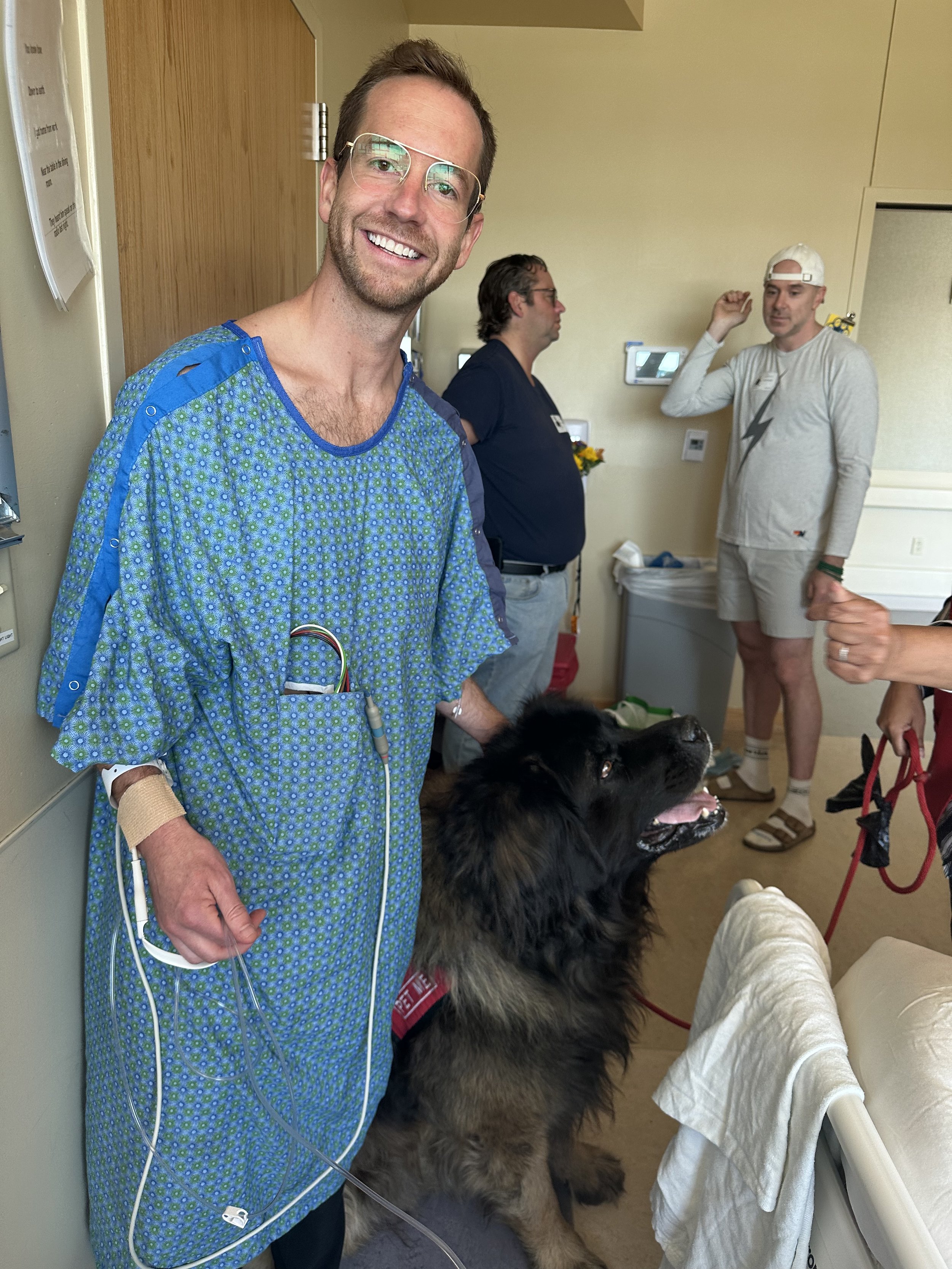


For Stroke Caregivers in the First Weeks
You may be running on adrenaline and admin.
Both naturally & eventually run out.
You are learning medications, appointments, symptoms, insurance, rehabilitation, transportation, what they can do alone, what they cannot, and when you are supposed to worry – while trying not to show how frightened you may be yourself.
A few things are worth knowing early.
Emotional and behavioral changes can happen after stroke. Fear, exhaustion, grief, neurological injury, medications, loss of independence, and the sheer shock of what happened can all shape how someone feels and behaves. Not every difficult moment is because of something you did or didn’t do.
You have permission and allowed to find this frightening.
And sometimes what helps most is not encouragement or another reminder to keep improving. It is having somebody nearby who does not require them to perform recovery – somebody willing to sit with what is true today.
Caring for someone after stroke can place significant strain on the caregiver too. Your sleep, health, fear, relationships, work, and sense of stability did not become irrelevant because someone you love had the stroke.
You are in this recovery story too.
When the First Weeks Start to End
Eventually, for many people, something strange happens.
The immediate danger begins to recede.
There may be fewer appointments. Other people start returning to their lives. You may look much better from the outside.
But fatigue, brain fog, missing words, fear, emotional changes, or the feeling that you are still not yourself may remain.
You are no longer in the acute crisis.
You are also not finished recovering.
PSI calls this stretch the Recovery Gap.
You are not in crisis. You are also not okay. The appointments have thinned out and the symptoms haven't.