

The Recovery Gap After Stroke

Not sick enough for the hospital. Not okay enough for your life.
The medical cadence slows. People stop checking in. You still wake up in a body that doesn't feel like home — and now everybody thinks you're fine.
Stroke recovery can feel stuck here, especially when fatigue, brain fog, fear, or other invisible symptoms remain long after the immediate crisis has passed.
We call this the Recovery Gap. It is not a diagnosis or a formal stage of stroke recovery. Having a name for it will not fix it. It does seem to help.
How to use this page
This page is mostly language. Language is more useful here than advice, because much of what makes the Recovery Gap hard is being unable to explain it.
You Might Be in the Recovery Gap If
You look recovered and feel fragile
Fear turns up on the quiet days rather than the hard ones
Your energy is unpredictable enough that you have stopped making plans
Thinking and feeling both cost more than they used to
Fatigue, brain fog, or other invisible symptoms after stroke still shape your days
The person looking after you is tired in a way that has stopped being temporary
You have started wondering whether this is just who you are now
Why Stroke Recovery Can Feel Stuck
Because it is not only a symptom problem.
It may rather be a certainty problem.
In the hospital, the job was survival and everyone agreed on it. Here, there is no agreed job, no measurable finish line, and often an assumption that the story is over.
The support can recede at almost exactly the point where the emotional recovery after stroke becomes harder to ignore.
This is not a rare experience. A systematic review of survey studies found that, on average, about three-quarters of stroke survivors reported at least one unmet need after leaving hospital – though the figure varied enormously between studies, from about one in five to more than nine in ten.
What Standard Stroke Recovery Measures May Miss
In 2025, researchers at two US stroke centers sat down with 30 survivors and 11 caregivers and asked what actually shaped their recovery. Five things came up. Two of them – reduced mobility and reduced participation in the world – were captured by the standard quality-of-life questionnaire.
The other three were not: losing your independence. Feeling ashamed. The fear of not knowing.
The authors were careful, and so are we: that is one qualitative study of one instrument, and they described it as a potential gap that may go unaddressed. But if you have felt shame about your own recovery and assumed it was a private failure, it is worth knowing that survivors in a research setting named the same thing, and that it did not appear on the form.
Jake's Field Notes
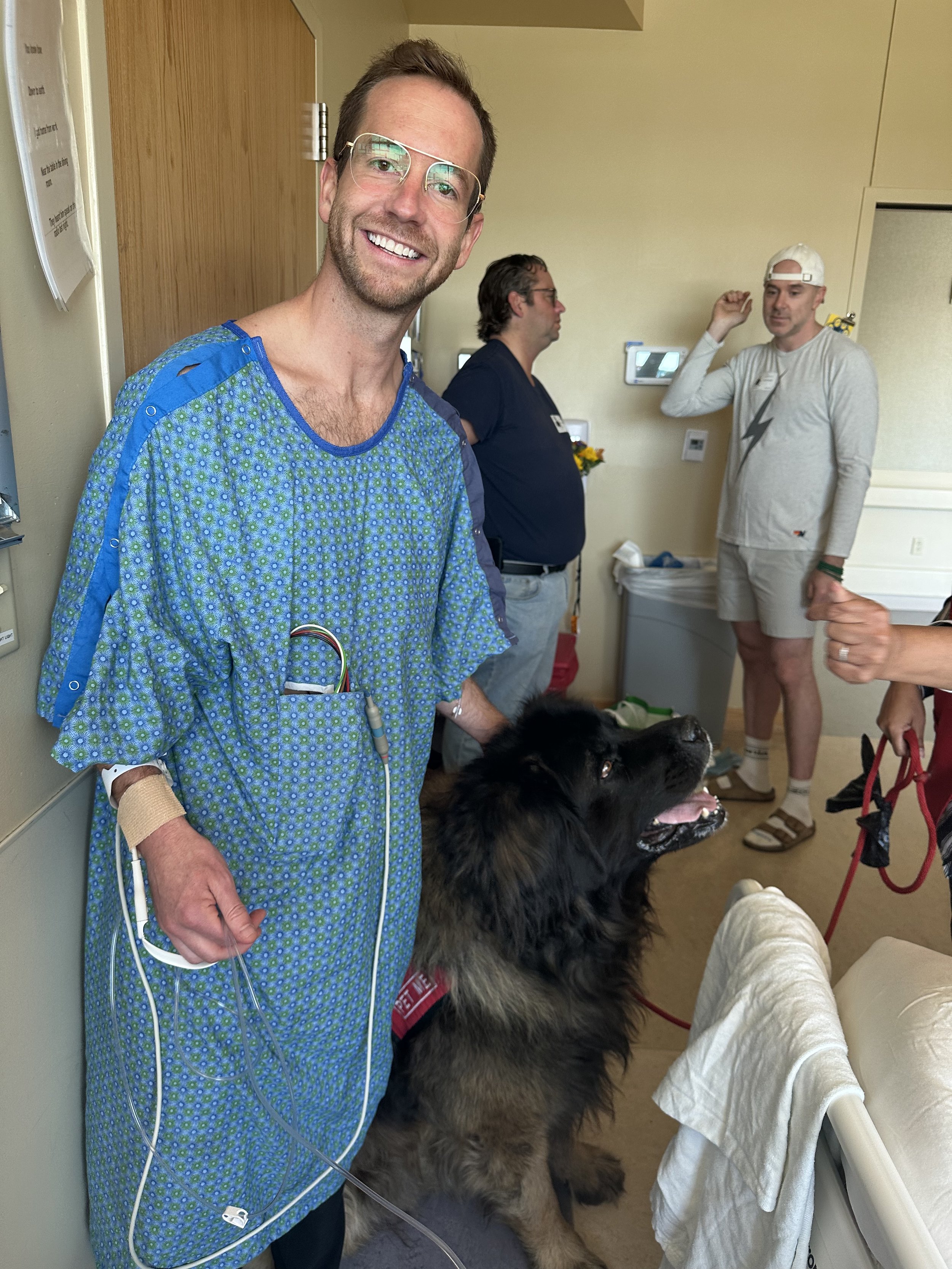
“I have been so worried the last few weeks, this time of recovery has been a ‘waste’… the judgmental Western mindset that seems to muddy the water… What if I’m not as strong, smart, quick, resilient as before?”
Read more of Jake’s Field Notes



A Reframe That Doesn't Gaslight You
“I'm stuck” is doing a lot of damage and very little work.
Some alternatives that are not just positive thinking:
My system is recalibrating.
My edges are still forming.
I am learning uncertainty tolerance the hard way.
If none of those land, ignore them.
The point is that “stuck” is a verdict, and a verdict is a strange thing to hand yourself in the middle of something.
Stroke recovery is often non-linear. A difficult day(s) does not necessarily mean you have gone backwards.
What Tends to Help, Without Pretending It Is Quick
Three supports, in roughly this order of usefulness:
Structure. A few repeatable anchors – walk, rest, food, daylight. Not a routine. Anchors.
Language. A sentence you can say/show to other people that explains an invisible symptom without requiring them to understand neurology. It is worth writing one down.
Other people. Specifically, people who will not demand optimism from you.
If You Are Looking After Someone After Stroke
The Recovery Gap can be brutal for caregivers in a way almost nobody acknowledges, because from the outside the emergency is over and your life is supposed to resume.
It often doesn't.
The person you are supporting may look recovered to everyone else, which means your continued vigilance can start to read to friends and family as overprotectiveness. Meanwhile, the relationship has quietly changed shape and nobody has said so out loud.
Caregiver strain after stroke is real. You are allowed to grieve what changed. You are allowed to want parts of your own life back.
Neither makes you a bad person.
The third thing on that list — other people who understand — can be the hardest to find on your own.
Community Calls for Stroke Survivors & Caregivers
The Emotional ThawWhen the immediate fear gets quieter, something else can begin to happen.
The feelings you put away because there was no room for them start arriving. It can feel like going backwards. It usually isn't.
PSI calls this the Emotional Thaw.